
Home / Blog / How Core Web Vitals affect your Google ranking
How Core Web Vitals affect your Google ranking
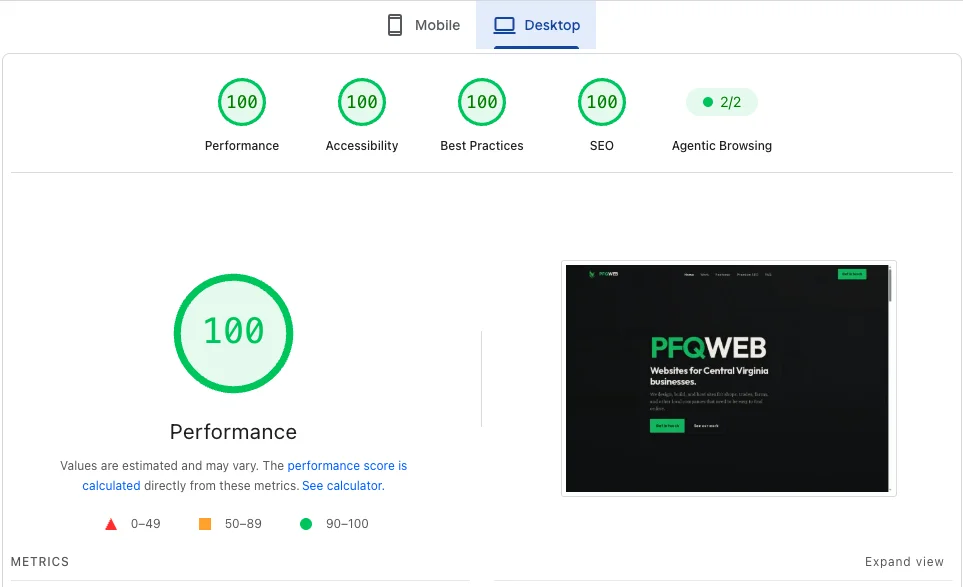
A slow site makes people leave. A jumpy site does too. Google also looks at how the page feels. You do not need to be an engineer. You just need to know if your site is easy to use.
This post covers three things. What Core Web Vitals measure. How mobile and desktop fit in. What a local business can do without getting lost in dashboards.
How Core Web Vitals affect ranking
Google uses a few real-user scores called Core Web Vitals. Three matter most right now. They do not replace good content. They do not replace clear local info. Think of them like a gate. When two shops look about the same, a hard-to-use site can lose.
Largest Contentful Paint (LCP): loading
LCP asks how long it takes for the main content to show. That is often a big photo or the main headline block. If someone lands on your home page and sees a blank screen for a few seconds, LCP is bad. The footer can load fine later and it still hurts.
Common causes: a giant hero photo, a slow server, fonts that block text, or a page that waits on heavy code before anything useful shows.
Good enough means the main content shows up quickly on a normal phone connection. Not only on office Wi‑Fi. You should be able to tell it feels stuck without a lab report.
Interaction to Next Paint (INP): tapping and clicking
INP asks how soon the page reacts after a tap or click. That means opening a menu, tapping Call, opening an FAQ, or starting a form. The page can look finished and still freeze for a moment.
Heavy menus, big tracking tools, chat widgets, and bloated builders often cause this. People will not say “my INP is bad.” They leave. Or they call someone whose site worked first.
Cumulative Layout Shift (CLS): things that jump
CLS asks if the page shoves content around while it loads. An image pops in and pushes the Call button. A banner loads late and moves the headline. You almost tap the right thing and miss.
Jumping layouts kill trust. They also block calls you may never see in a report.
LCP, INP, and CLS cover load, response, and stability. Great scores will not put you first on their own. Weak scores can still cost you when competitors are close.
Mobile and desktop
Speed is not only a phone issue. Google looks at experience on mobile and desktop. Mobile still matters a lot. That is because of mobile-first indexing. For most sites, Google mainly looks at the phone version to understand the pages and how they feel.
In simple terms:
- Your phone view should load cleanly, stay steady, and react to taps.
- Desktop still matters. People research and buy on bigger screens too.
- A site that only works on fast coffee-shop Wi‑Fi is not ready for a customer on cell data in a parking lot.
- If you still have separate mobile and desktop sites, both need the same key facts. Hours, services, address, and phone. Not a thin mobile stub.
What this means for a Central Virginia business
Most local sites do not need a long performance report. They need a page that shows up fast. Buttons should not jump. Taps should work. That helps people and search.
What we see a lot:
- Full-size phone photos used as big homepage images
- Page builders stacking plugins, popups, and carousels
- Chat, reviews, and maps loading on every page even when you do not need them
- Cheap hosting that slows down when things get busy
- Themes that shift after fonts or ads finally load
Fix those first. Chasing a perfect lab score on a machine that is not like your customer phones helps less.
How to check without the jargon pile
Two starting points:
- Your own phone on cellular. Open the home page cold. How long until you can read who you are and tap the number? Try the menu and the contact path. Do things jump?
- PageSpeed Insights or Search Console. They report the same Core Web Vitals family when enough real visitors exist. Use the scores as a guide, not a letter grade on your brand.
If you do not have much traffic yet, lab tests can still show big problems. Huge images and heavy scripts are common ones.
What we do about it
We build light pages. We size and compress images. We keep extra scripts out of the way. We host in a way that stays responsive. Speed is part of a usable site. It is not a sticker we add at the end.
If you already have a site, start with the phone test. Call button. Form. Then look at Core Web Vitals for patterns. For more on why slow pages lose people before ranking, see Why a slow website costs you customers.
Contact